What Could You Do With AI?
Written for Kids. Surprisingly Useful for Adults.
AI Is More Than a Search Box
Many people use AI like a search box. They ask a question, receive an answer and close it. That is only a tiny part of what AI can do.
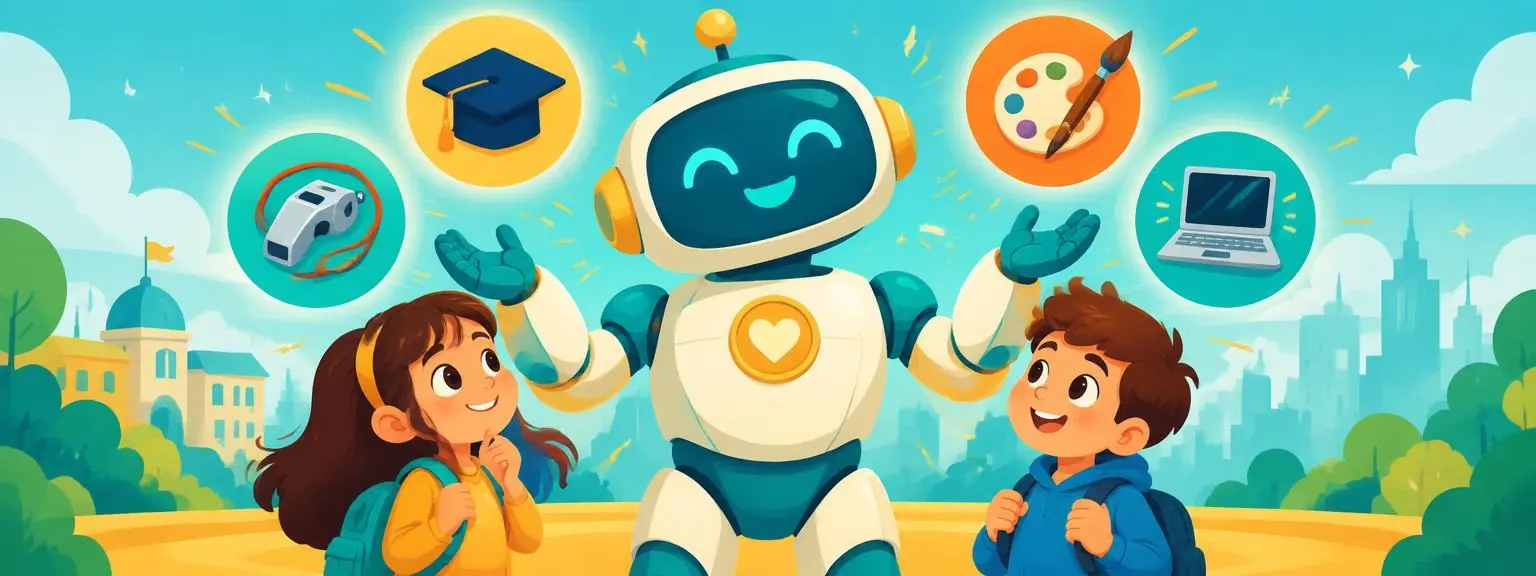
🎓 Teacher: explains things in different ways.
🏋️ Coach: helps you improve your work.
🎨 Creative Partner: helps develop your ideas.
💻 Coding Assistant: teaches you to build things.
The real skill is learning to recognise when AI could help you.
Do Not Use AI to Do Less
If you use AI to complete your work for you, you might finish faster, but you will not necessarily become better at anything. The best way to use AI is to push yourself further.
The aim is not to avoid thinking. The aim is to think bigger.
Without AI: you might write one version of a story, or memorise ten French words.
With AI: you could explore five ideas, improve your characters, get feedback and create an illustration, or practise a conversation, take a quiz and create a game with those words.
AI as Your Teacher & Tutor
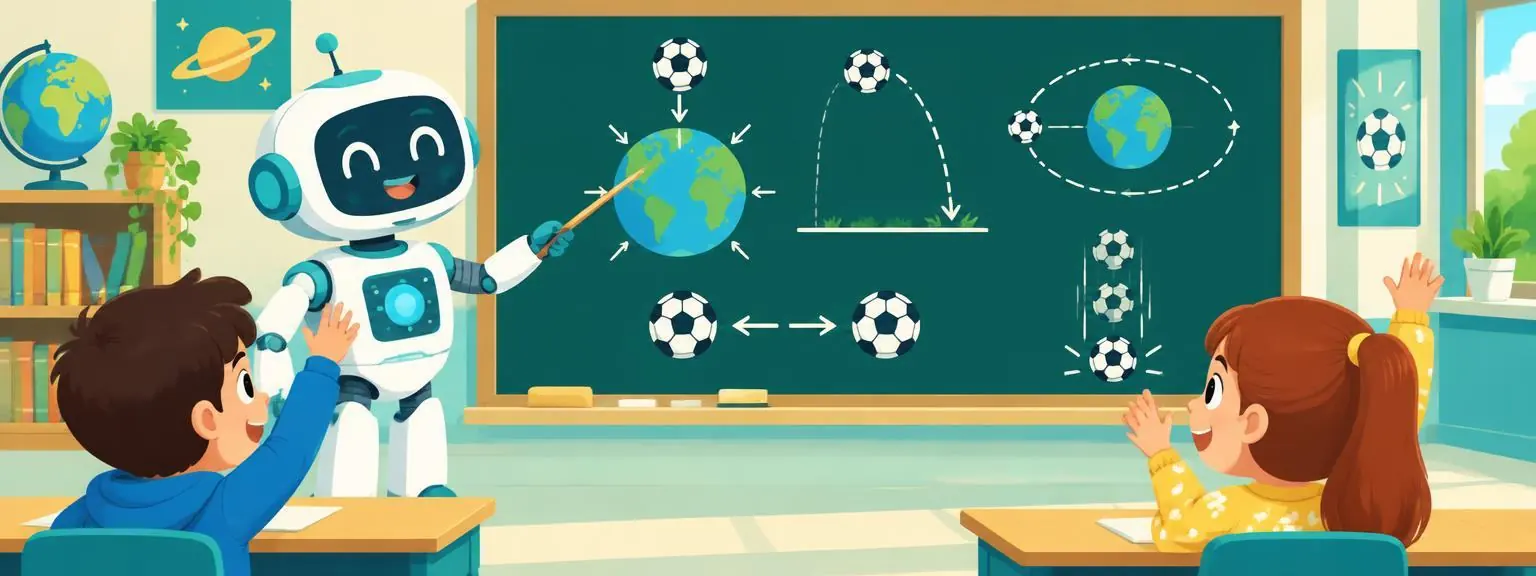
AI can explain the same subject in different ways until you understand it. Try asking:
- Change the level: “Explain gravity to me as if I am seven years old. Now explain it at GCSE level.”
- Change the example: “Explain gravity using a football match.”
- Test your understanding: “Ask me questions to find out which part I do not understand.”
A good learner does not simply say “I don't understand.” They work out exactly which part they do not understand. If the first explanation does not work, ask for a different one!
AI as Your Coach
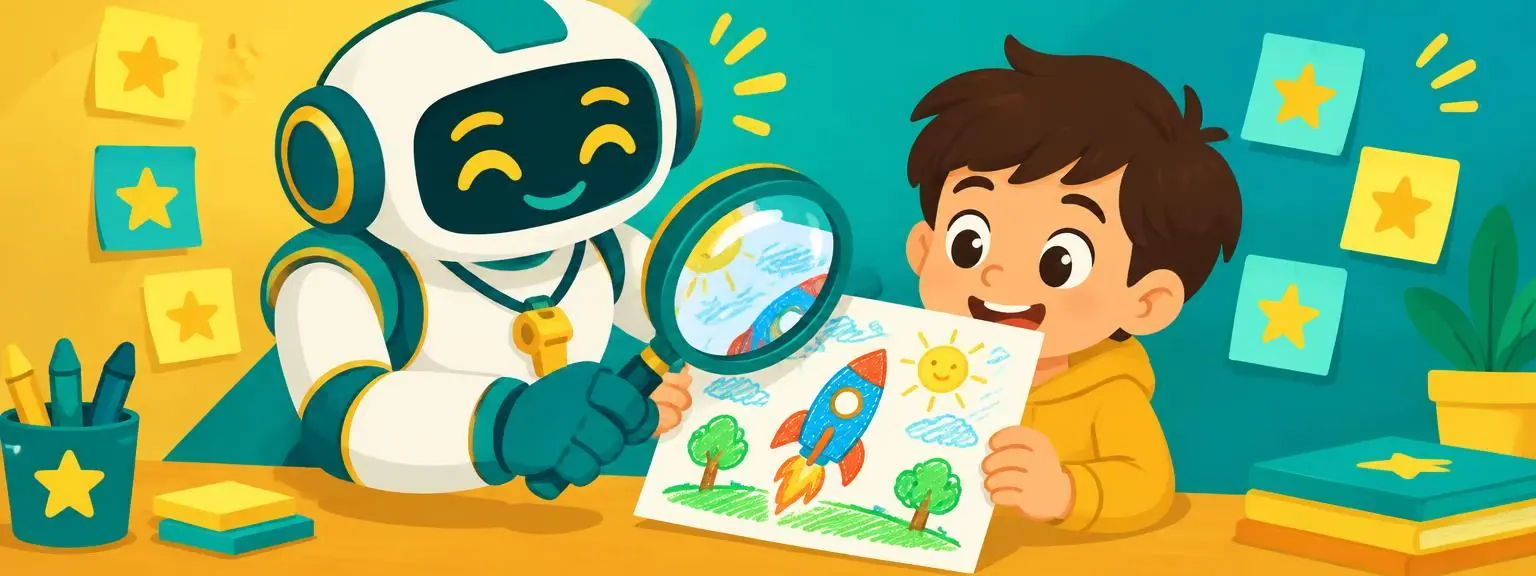
A coach helps you improve something you have already attempted. Show AI your work and say:
- “Tell me the two strongest parts and two things I should improve. Do not rewrite it for me.”
- “Check my answer against this marking guide. Tell me what is missing without writing the answer.”
- “Ask me five questions that will help me make this character more interesting.”
- “Look at my revision plan. Is it realistic? What have I forgotten?”
The work should remain yours. AI provides advice, but you decide what to change.
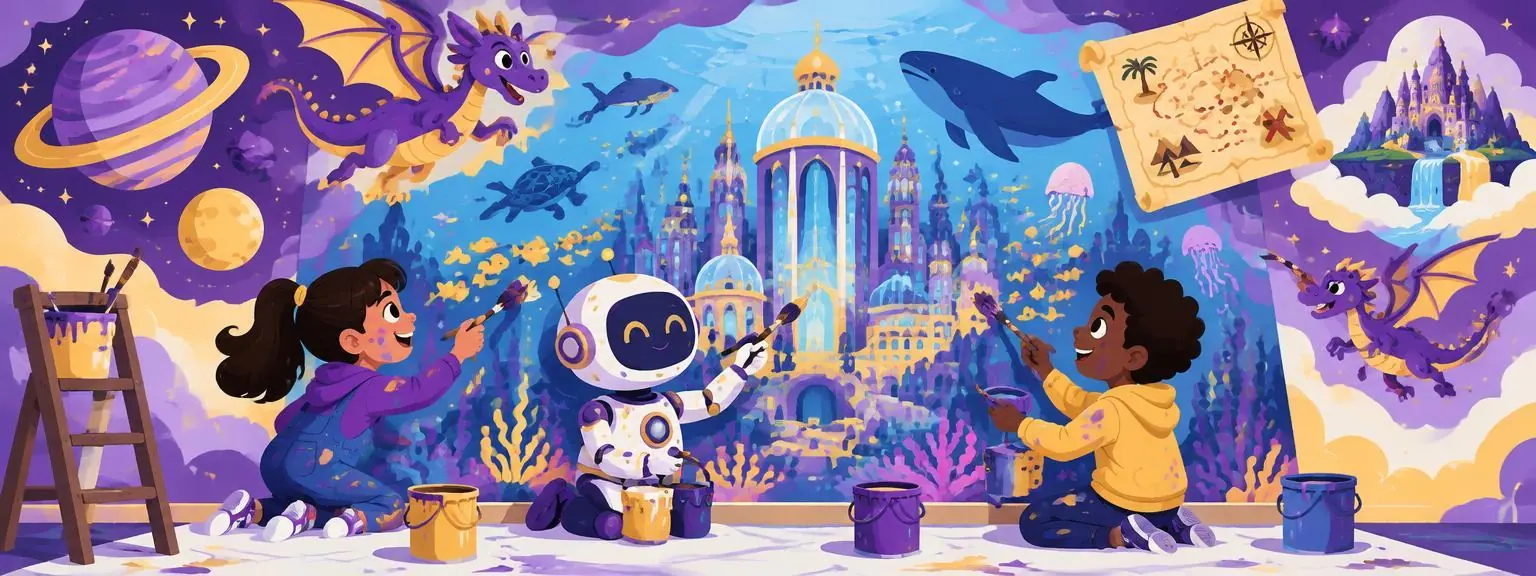
AI as Your Creative Partner
AI can help you develop an idea without taking over the whole project. You could use it to:
“I have invented an underwater city powered by ocean currents. Ask me ten questions that will help me decide how people travel, eat, attend school and stay safe.”
🌍 Invent worlds: design a new planet, imagine a city in 2100, or invent an animal for Mars.
📖 Build stories: create characters, write a song, plan a school play or design a board game.
🎨 Make art: turn your description into an illustration or create clues for a treasure hunt.
Begin with your own idea, then ask AI to help you expand it.
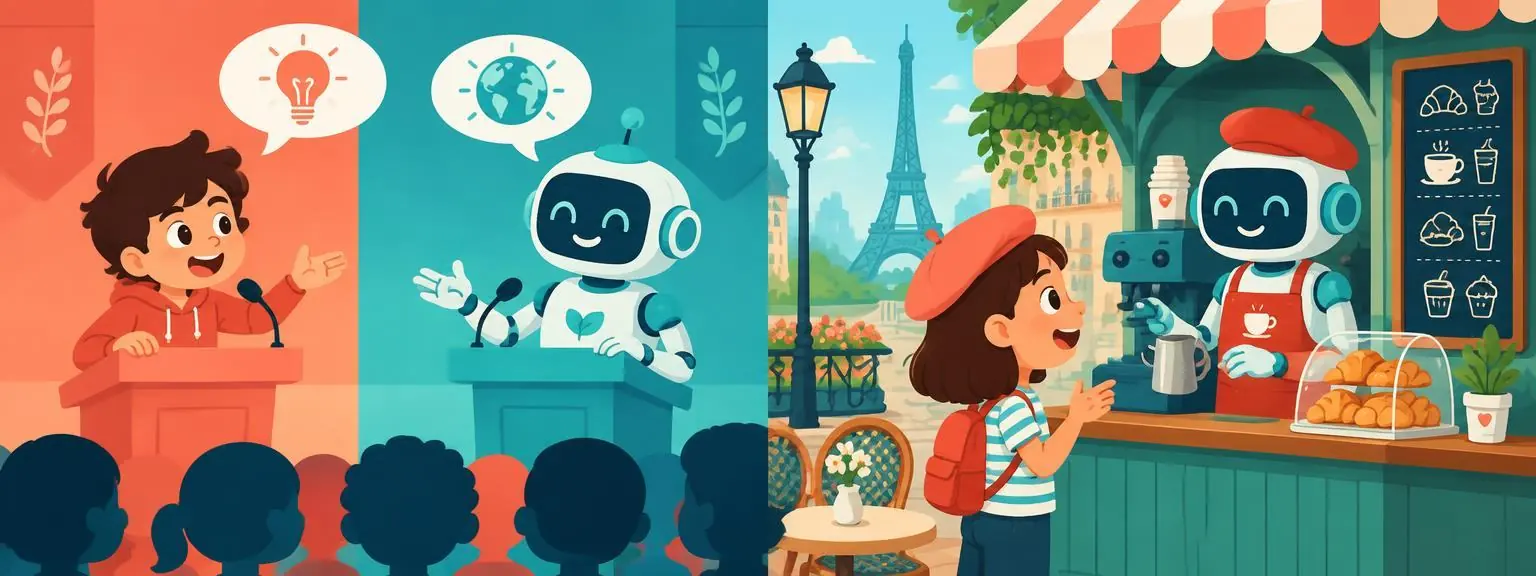
AI as Your Challenger & Practice Partner
The Challenger: AI does not always have to agree with you. Try: “I think school should begin at 10 o'clock. Ask me difficult questions about my idea.”
“Give me the strongest argument for and against homework.”
“Pretend you disagree with my solution. What problems can you find?” This helps you prepare for debates and presentations.
🎭 The Practice Partner: AI can create realistic situations where you practise a skill: speaking another language, preparing for an interview, explaining an idea to a younger child, or handling a disagreement calmly.
“Pretend you work in a café in Paris. Speak to me in simple French and correct my mistakes.”
AI as Your Translator & Organiser
As a Translator, AI can turn: a difficult explanation into simple language; a long article into key points; a paragraph into a table; a story into a play; a lesson into a quiz.
Always check important information, AI can misunderstand words and context.
📋 As an Organiser, AI can turn big tasks into smaller steps: “I have two weeks to complete a project about Ancient Egypt. Help me divide it into short tasks.”
“Put these ideas into the best order for a presentation.” “Help me create a checklist for organising a charity cake sale.”
AI helps you plan, but you are responsible for following the plan.
AI as Your Researcher, Inventor & Coder
1. Researcher: AI helps you begin exploring a subject. Ask it what questions to investigate, what areas to research, and what search terms to use. Always check important facts using books, trusted websites, teachers or experts.
2. Inventor: AI helps you move from an idea to a design. Ask it to define the problem, suggest solutions, compare materials and find weaknesses. Try: “Do not design it for me yet: ask me questions so I can develop my own idea.”
3. Coding Assistant: AI can help you create games, websites and quizzes. Understanding the code is more important than just copying it. Ask AI to explain each step and teach you what the code does.
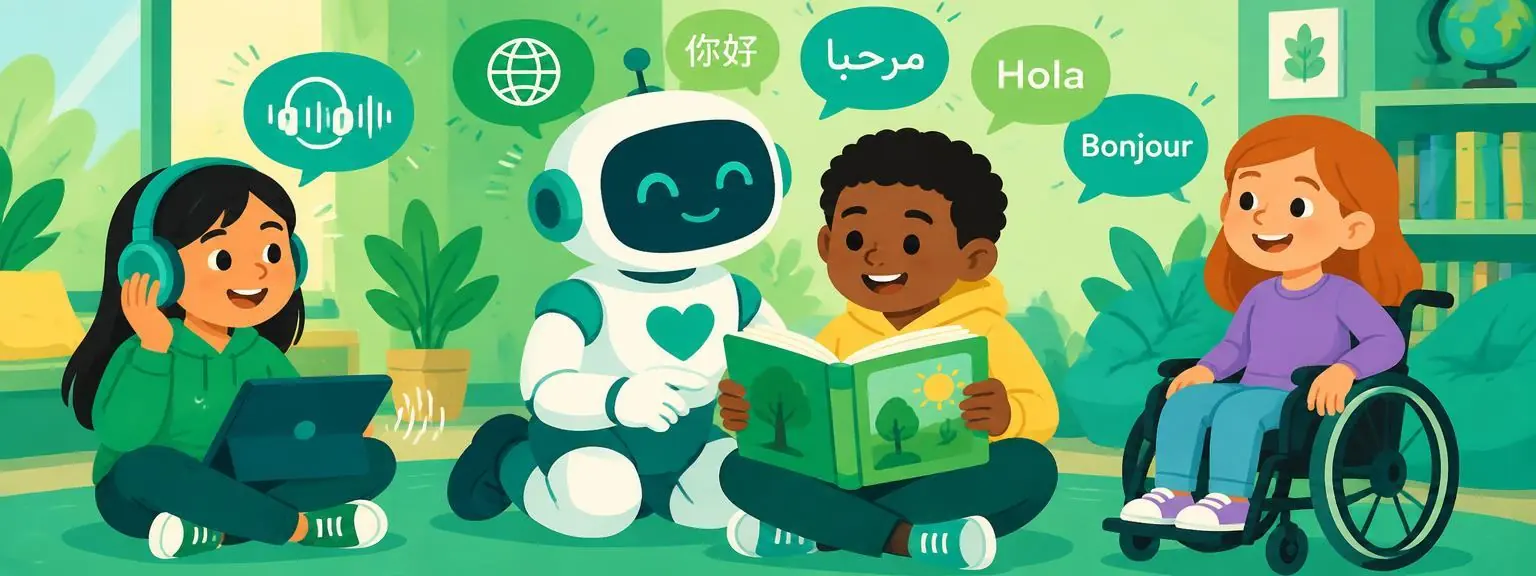
AI Can Help Everyone
AI can make learning and communication more accessible. It can:
- Read & Listen: read text aloud, turn speech into writing, or describe an image.
- Different Levels: present the same information in several ways and create practice activities at different levels.
- Simplify & Translate: simplify difficult instructions, translate between languages and help someone organise their thoughts.
AI should help more people participate. It should never be used to make decisions about someone's ability or worth.
The Possibility Test
Whenever you have a task, ask yourself these questions:
- Could AI explain this?
- Could AI help me practise it?
- Could AI question my thinking?
- Could AI help me organise or improve it?
- Could AI help me create or take it further?
You do not need to use AI for every task. The skill is recognising when it could make the task more useful, creative or challenging.
🤖 Fun AI Facts
One Question, Many Answers
You can ask AI the same question ten different ways and get ten different answers, try it!
Always Learning to Explain
AI can explain gravity using football, cooking, toy cars or even a fairy tale, you choose!
Speaks Many Languages
AI can translate between hundreds of languages instantly even ones you've never heard of.
Helps You Build Games
With AI's help, you can design and code a real game, even if you have never programmed before.
Not Always Right!
AI can make mistakes, always check important facts with books, teachers and trusted websites.
📘 Quick Summary
Think Bigger
AI helps you go further than you could alone not do less.
Many Roles
AI can be your teacher, tutor, coach, creative partner, challenger, practice partner, translator, organiser, researcher, inventor and coder.
Stay in Control
Always decide what to change, what to keep and what to check, the work stays yours.
Ask Better Questions
The real skill is learning to prompt AI well and recognise when it could help.
Always Check Facts
AI can make mistakes, verify important information with trusted sources.
AI Dictionary
Prompt
The instruction or question you give to AI.
AI (Artificial Intelligence)
A computer programme that can learn and respond like a human.
Tutor
Someone who helps you reach the answer, not just give it to you.
Feedback
Advice about your work that helps you improve it.
Reliable Source
A trusted place to check important facts (e.g. books, teachers).
Prototype
A first simple version of an invention to test your idea.
Debate
A structured discussion where you argue different points of view.
Code
Instructions written in a programming language that a computer can follow.
Iteration
Improving your idea or work step by step, again and again.
Accessible
Made easier so that more people can use or understand it.
You are now an AI expert!
Do not use AI to do less. Use it to learn more, think bigger and create something you could not have created alone. 💪🤖