Staying Safe with AI
Written for Kids. Surprisingly Useful for Adults.
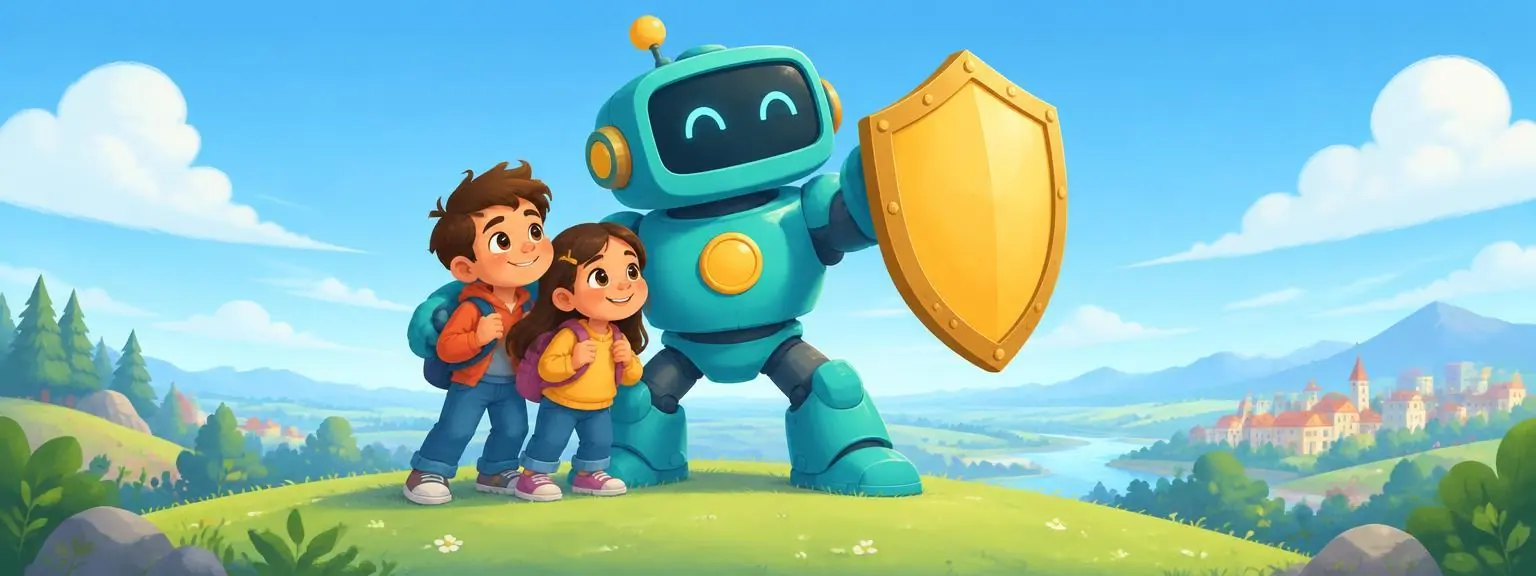
AI Can Help But It Is Not Always Safe
AI can do amazing things: it can explain a difficult subject, test your spellings, help you improve your writing and bring an idea to life.
But it can also give you false information, expose something private, or do so much of your thinking that your own brain gets less practice. The answer is not to be frightened of AI. The answer is to understand the risks before they become problems.
Keep Personal Information Private
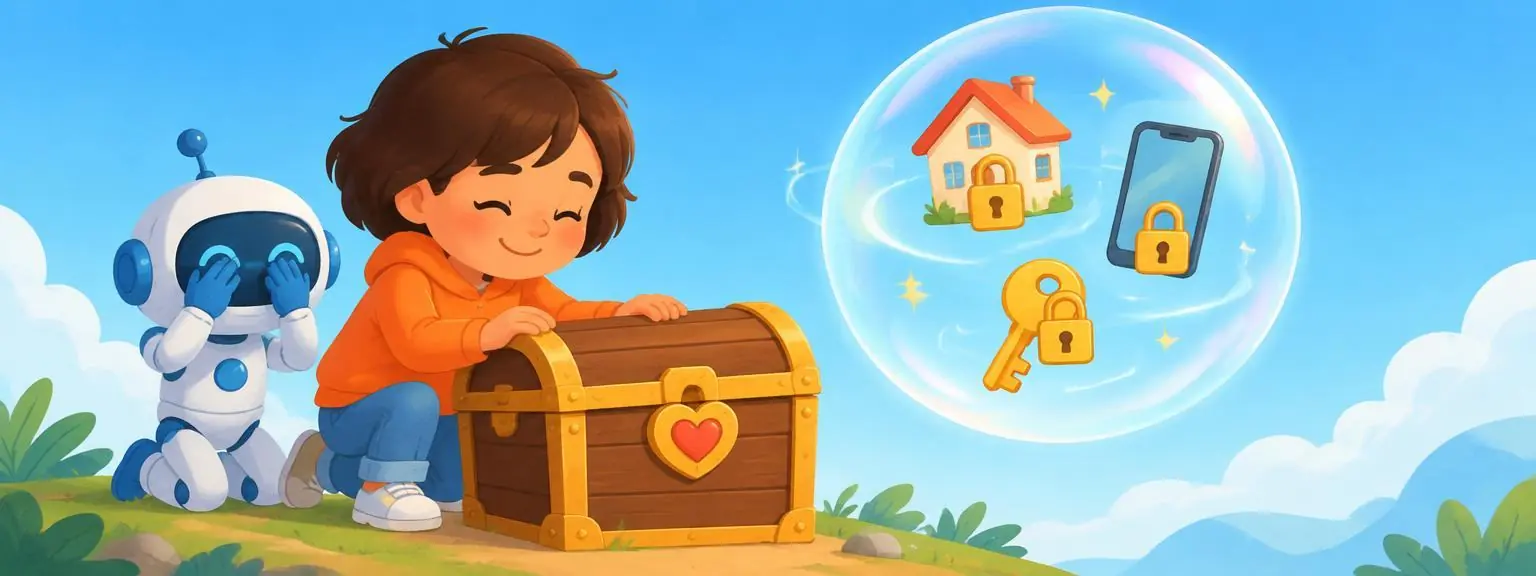
AI does not need to know exactly who you are. Never enter: your full name, home address, telephone number, passwords, school, exact location, passport details or travel plans.
❌ Unsafe: “My name is Sarah Ahmed. I attend Oakfield School and live at 16 Green Road.” ✅ Safe: “I am 10 years old and follow the British curriculum. Help me understand fractions without giving me the answer immediately.”
The AI has everything it needs without knowing Sarah's surname, school or address.
What Could Someone Do With Private Information?
One small piece may not seem dangerous but pieces join together.
- Knowing your full name, birthday, school and address could let someone pretend to be you online or access your accounts.
- Knowing your parents' names and numbers could let someone send a fake message asking for money.
- Knowing your school route and timetable means someone could know where you are each day.
- A photo of your passport could be used to open accounts or commit fraud.
- A visible QR code or travel ticket could let someone copy or interfere with a booking.
Private information is valuable because it helps a scammer sound convincing.
Be Careful When Uploading Photographs
A photograph can reveal far more than you notice.
A school letter may show your full name, address, pupil number and a parent's contact details.
A passport photo contains your name, date of birth, passport number and nationality.
Even a home photo might show a house number through a window or a school badge on a uniform.
- Will this identify me? Does it show where I live or study?
- Is there a passport, ticket, bank card, QR code or barcode visible?
- Does it contain information about somebody else?
If you are unsure, do not upload it. Ask a trusted adult first.
AI Can Be Confidently Wrong
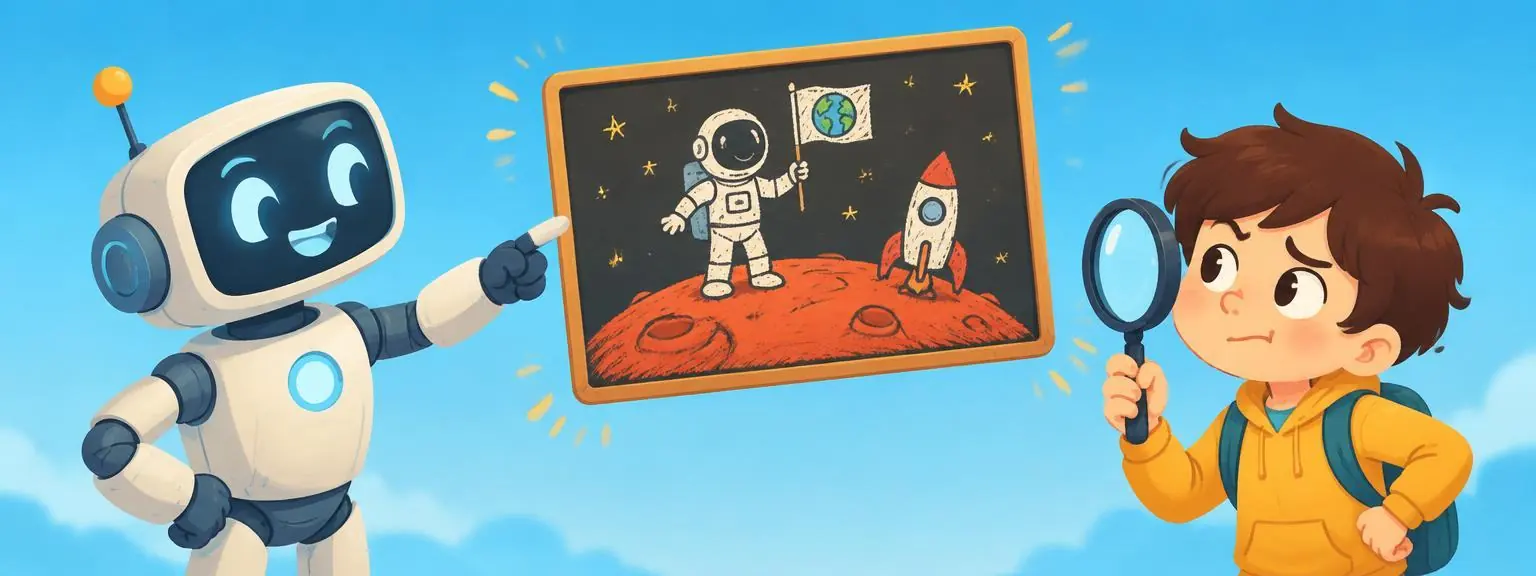
This is called an AI hallucination. AI does not always say “I don't know.” Sometimes it invents an answer that sounds polished and convincing.
Imagine asking: “Who was the first person to walk on Mars?” Nobody has walked on Mars. But AI could invent an astronaut, date and mission, and the answer might sound impressive, yet every word could be nonsense.
Good writing and good information are not the same thing. Always check important facts using a trusted book, school textbook, government website or recognised news organisation.
People Can Use AI To Trick You
AI can create convincing fakes.
Before believing or sharing something surprising, ask: Who created it? Where did it first appear? Is it being reported somewhere reliable? Could someone be trying to frighten or excite me?
- Someone could copy the voice of a person you know and use it to ask for money.
- They could create a fake photograph designed to embarrass somebody.
- They could make it appear a famous person said something they never said.
- They could create a message that looks like it came from your school, bank or family.
Something looking real is no longer proof that it is real.
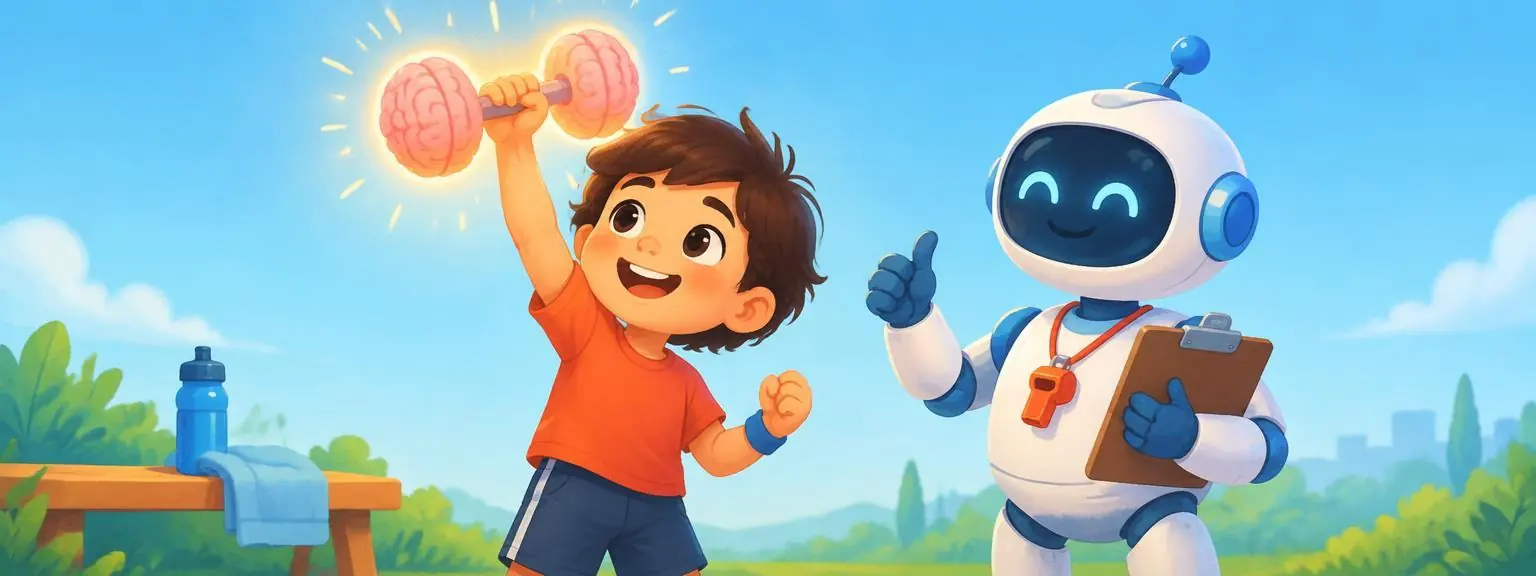
Brain Mush: When AI Does Your Thinking
If you ask AI to write every answer, solve every problem and create every idea, your brain receives less practice. Tasks begin to feel harder without AI because the machine has been doing the difficult part for you. This is sometimes called brain mush.
❌ Brain mush prompt: “Write a review of this book for me.” You get words, but they are not yours. ✅ Better approach: write your own review first, even if it is rough. Then ask: “Imagine you are my teacher. Read my review but do not rewrite it. Ask me questions about anything important I have not included.”
AI has not replaced your thinking. It has helped you discover thoughts that were already yours.
Use AI as a Coach, Not a Substitute
Make your brain go first, always.
- 📐 Maths: “Ask me what I think the first step is. Give me a clue if I am stuck, but do not reveal the answer.”
- ✍️ Writing: “Read my paragraph and ask me three questions that will help me add more detail. Do not rewrite it.”
- 🔬 Science: “Let me explain photosynthesis in my own words. Identify anything I have misunderstood and ask me to try again.”
- 🔤 Spelling: “Test me one word at a time. Keep a list of my mistakes and test me on those words again.”
Think first. Attempt first. Write first. Then use AI to question, challenge and improve what you have done.
Stop If Something Feels Wrong
You will not be in trouble for asking for help. If AI produces something frightening, offensive, confusing or unsuitable:
- 1. Stop the conversation immediately.
- 2. Do not share or forward the content.
- 3. Show a teacher, parent or trusted adult.
- 4. Explain what you asked and what the AI produced.
Be Kind, Be Fair, Think for Yourself
AI should make your thinking stronger, not unnecessary.
Be kind and fair: never use AI to bully, embarrass or deceive someone. Do not create fake pictures, copy voices, spread rumours or write cruel messages. If you would not do something without AI, do not use AI to do it for you.
AI can repeat unfair ideas: it learns from information created by people and that information can contain mistakes, stereotypes and unfair opinions. Always ask: Who is included? Who is missing? Is an assumption being made?
Remember: AI can repeat unfair ideas even when nobody directly instructed it to be unfair.
🤖 Fun AI Safety Facts
AI Hallucinations Are Real
AI can invent facts, dates, names and even entire books and say them with complete confidence.
Your Voice Can Be Copied
AI can clone a person's voice from just a few seconds of audio and use it to say things they never said.
A School Photo Can Reveal a Lot
Even an innocent photo at home might accidentally show a house number, a school badge or a family name on an envelope.
AI Does Not Know Everything
AI is trained on past data and can be out of date, biased or simply wrong, always double-check important facts.
📘 Quick Summary
Protect Your Privacy
Never share your full name, address, school, phone number or passwords with AI. It does not need them to help you.
AI Can Be Wrong
AI can confidently invent facts, names and dates. Always check important information using trusted sources.
Fakes Look Real Now
AI can clone voices, create fake photos and write convincing messages. Something looking real is not proof it is real.
Make Your Brain Go First
Think, attempt and write before turning to AI. Use it to question and improve your work, not to replace it.
PAUSE Before You Act
Protect private info · Ask a trusted adult · Understand AI can be wrong · Stop if unsafe · Examine before sharing.
Dictionary
AI (Artificial Intelligence)
A computer system that can learn, answer questions and create things by finding patterns in huge amounts of information.
Hallucination
When AI invents a fact, name, date or source that does not exist, and states it confidently as though it were true.
Prompt
The question or instruction you type into an AI tool to get a response.
Brain Mush
When AI does so much of your thinking that your own brain gets less practice and tasks start to feel harder.
Deepfake
A video, photograph or voice recording that has been created or altered by AI to make it look or sound real when it is not.
Private Information
Details that could identify you or someone else, such as your name, address, school, phone number or passport.
Bias
When AI learns unfair or unbalanced ideas from the information it was trained on, and repeats those ideas in its answers.
Trusted Source
A reliable place to check facts, such as a school textbook, library book, government website or recognised news organisation.
Scam
A trick designed to deceive someone, often to steal money, personal information or access to accounts.
PAUSE
A five-step check: Protect privacy · Ask a trusted adult · Understand AI can be wrong · Stop if unsafe · Examine before sharing.
You are now an AI Safety Expert!
Protect your information, question what AI tells you and make your own brain go first. AI should make your thinking stronger, not unnecessary! 💪🤖