
Chess Unlocked
Learn the pieces. Build your strategy. Outsmart your opponent. Written for Kids. Surprisingly useful for adults ♟️
Welcome to Chess
Chess is a battle between two armies, but nobody gets hurt. Instead of strength, your weapons are planning, patience, memory, and clever ideas. Every piece moves differently, and every move changes what can happen next.
The most important rule? Think before you move!
The Chessboard
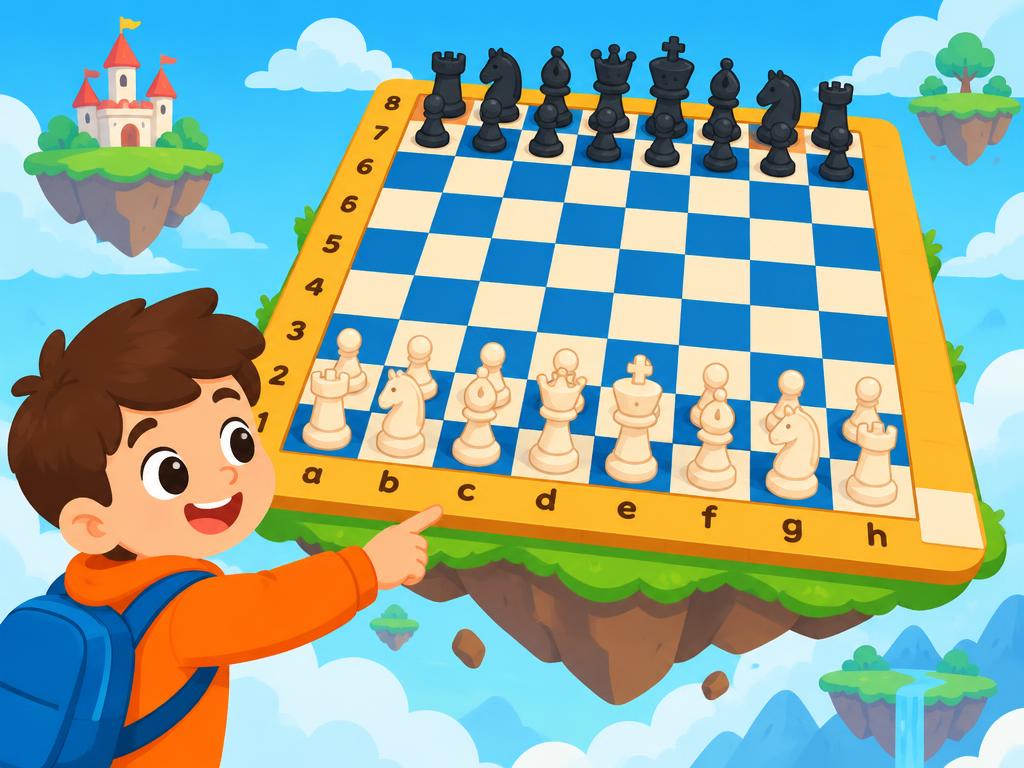
A chessboard has 64 squares arranged in 8 rows and 8 columns. The squares are light and dark.
- 64 Squares8 squares across × 8 squares down
- Board PositionEach player has a white square in the bottom right corner. White on the right!
- White Moves FirstPlayers then take turns moving one piece at a time
- The MissionTrap the enemy king so it cannot escape. This is called CHECKMATE
Meet Your Chess Army
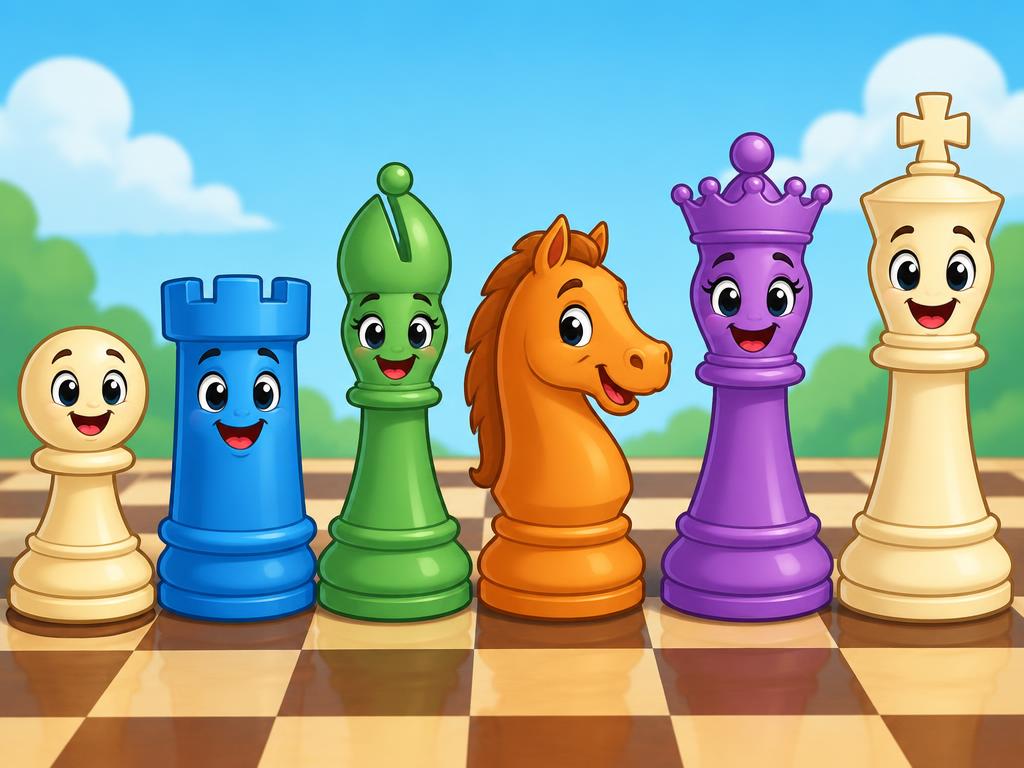
Each chess piece has a different movement and a different job.
- Pawn, the Foot SoldierMoves forward, captures diagonally, can move two squares on its first move
- ♜ Rook, the CastleMoves any number of squares along rows and columns
- ♝ Bishop, the Long Range AttackerMoves diagonally and stays on one colour all game
- ♞ Knight, the JumperMoves in an L shape and can jump over pieces
- ♛ Queen, the PowerhouseMoves in straight lines and diagonals. Do not risk her carelessly
- ♚ King, the One You Must ProtectMoves one square in any direction
Capture and Check
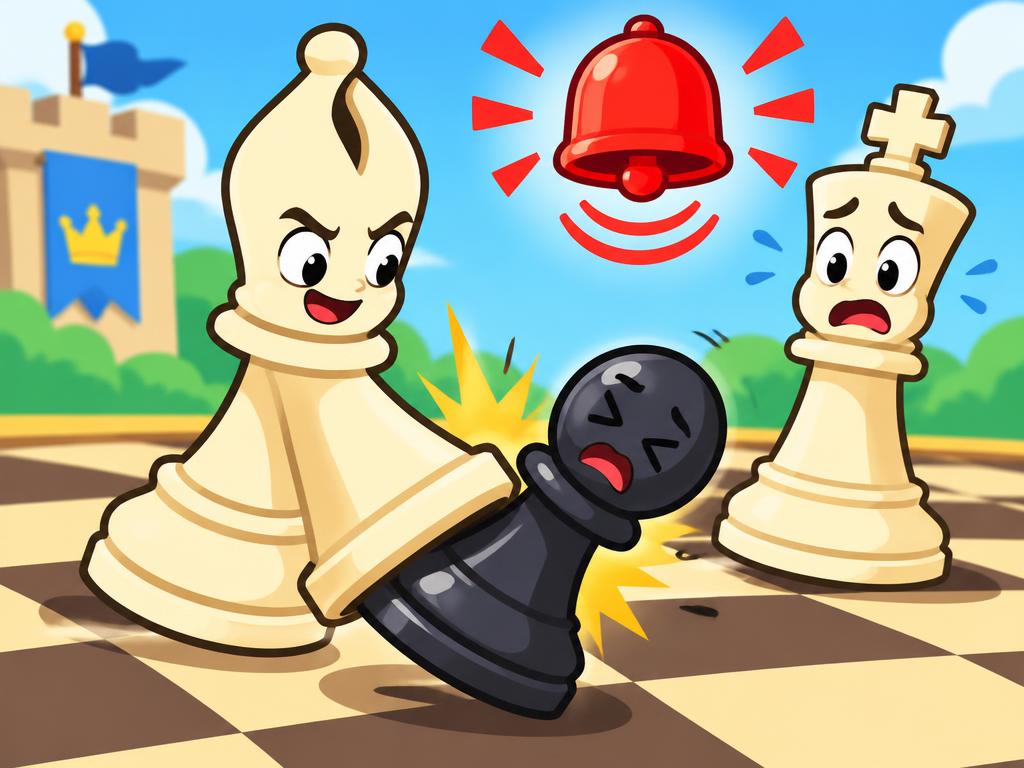
Move onto an opponent's piece to capture it. But capturing does not automatically make a move good. Always ask: what happens after I capture it? Your king is in CHECK when an enemy piece attacks it, and you must respond at once.
You cannot simply ignore check.
- MoveMove your king to a safe square
- BlockPut another piece between the attacker and your king
- CaptureCapture the attacking piece
Checkmate and Stalemate
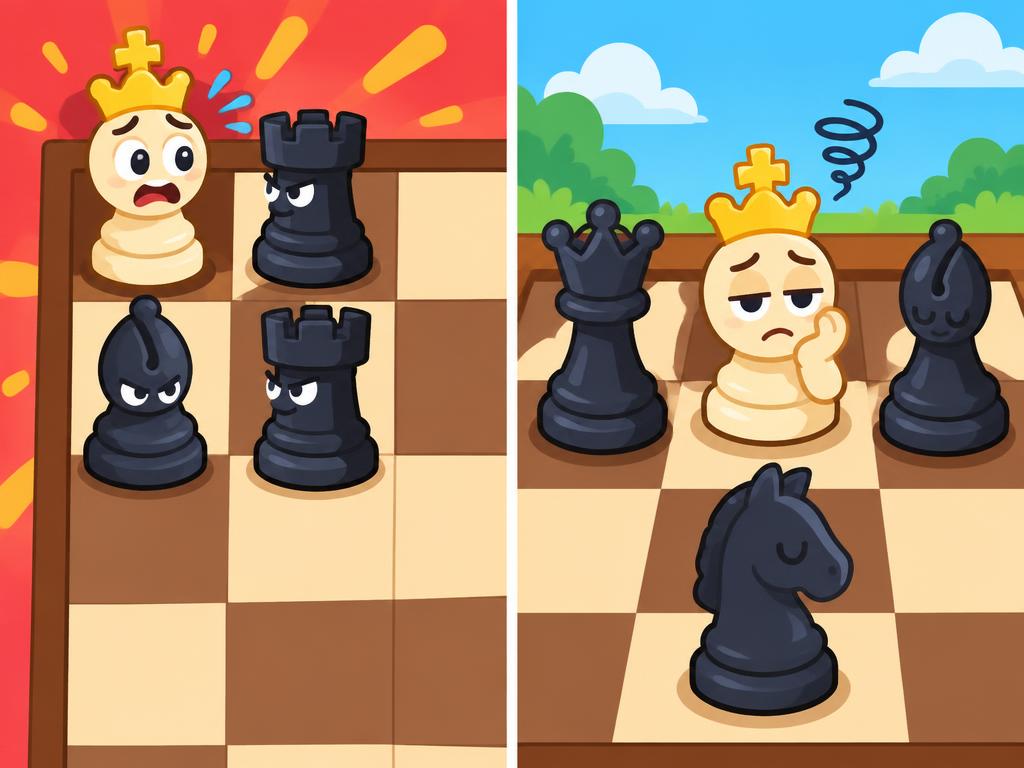
- CheckmateThe king is in check and has no legal way to escape. The game ends immediately. The king is never actually captured.
- StalemateA player has no legal move, but the king is NOT in check. The game is a draw, even if one side has many more pieces!
Special Chess Moves
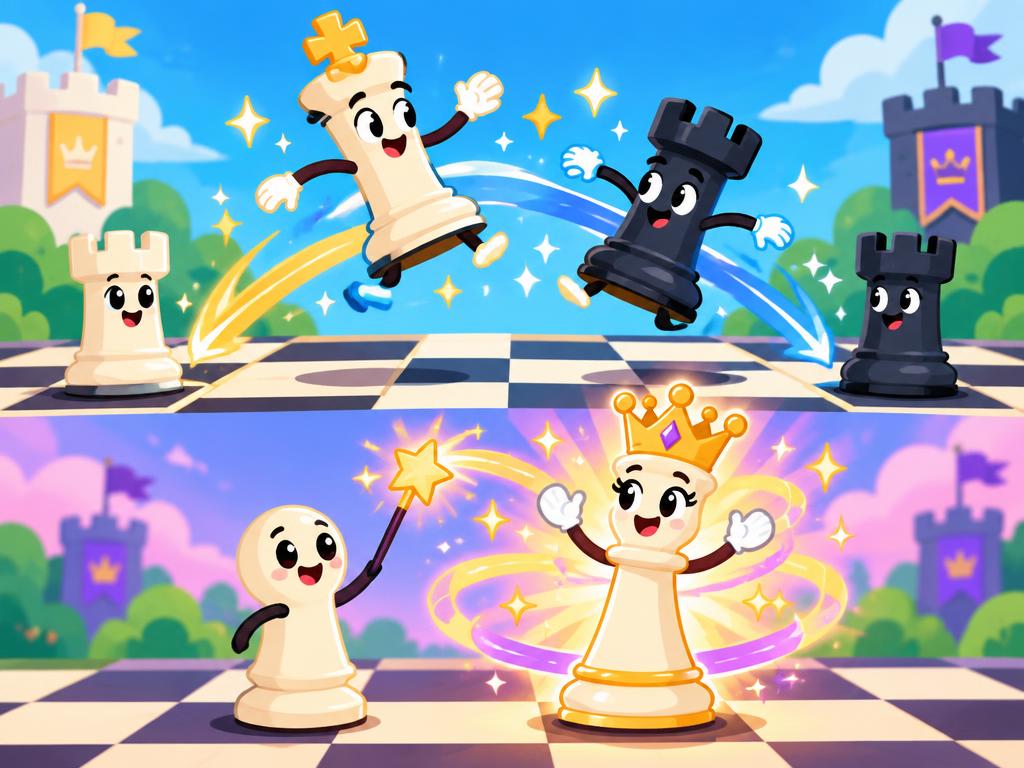
- CastlingThe king moves two squares toward a rook and the rook jumps beside it. Not allowed in, through, or into check
- PromotionA pawn reaching the far side becomes a queen, rook, bishop, or knight
- En PassantA pawn that moves two squares and lands beside yours can be captured as if it moved one, only on the very next move
How Much Are Pieces Worth?
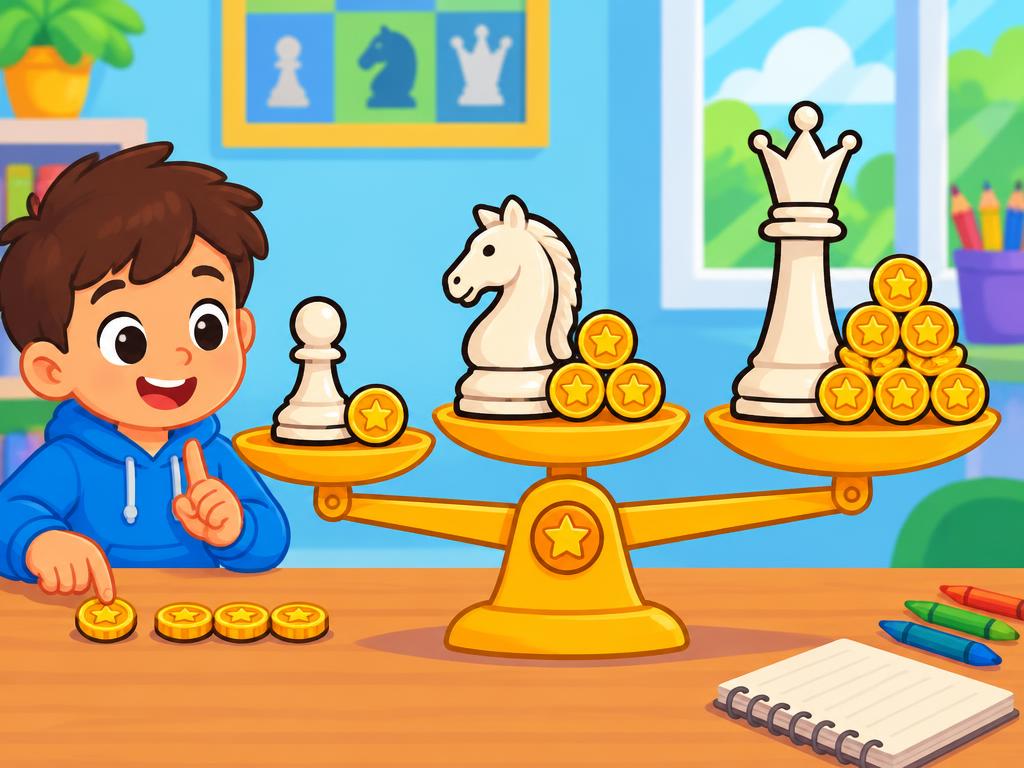
Players use approximate point values to judge whether an exchange is useful.
These numbers are guides, not laws. The position on the board matters!
- Pawn1 point
- ♞ Knight3 points
- ♝ Bishop3 points
- ♜ Rook5 points
- ♛ Queen9 points
- ♚ KingPriceless
The Opening: Prepare Your Army
A chess game has three acts: opening, middlegame, and endgame. The opening is roughly the first 10 to 15 moves. Your goal is not to attack wildly but to prepare your pieces.
Centre. Develop. Castle. Connect.
- CentreControl the four central squares
- DevelopBring out your knights and bishops
- CastleMove your king to safety
- ConnectLet your rooks support each other
The Middlegame: Build Your Attack
Pieces become active and the real battle develops. Before every move, ask:
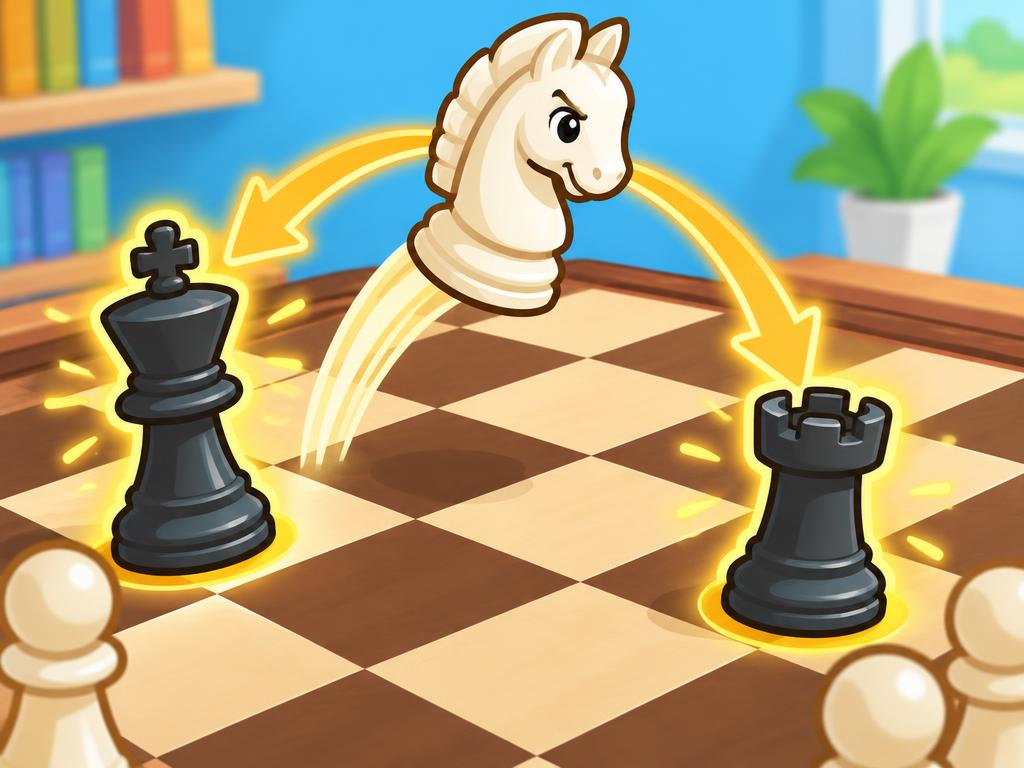
Chess Tactics
Tactics are short combinations that win material, create checkmate, or gain an advantage.
- ForkOne piece attacks two or more pieces at once. Knights love forks
- PinA piece cannot move without exposing a more valuable piece behind it
- SkewerA valuable piece must move, exposing another piece behind it
- Discovered AttackOne piece moves away and reveals an attack from another
- SacrificeGiving up material on purpose to gain something bigger. Always calculate first
The Endgame: Every Move Matters
Many pieces have been exchanged. The game looks quieter, but every move becomes important.
In the opening, protect your king. In the endgame, activate your king.
- ♚ The King Gets StrongerIt becomes an active fighting piece
- Passed PawnsA clear path toward promotion is powerful
- ♜ Rooks Love Open LinesOpen files make rooks strong
- Material Is Not EverythingPosition and king safety matter too
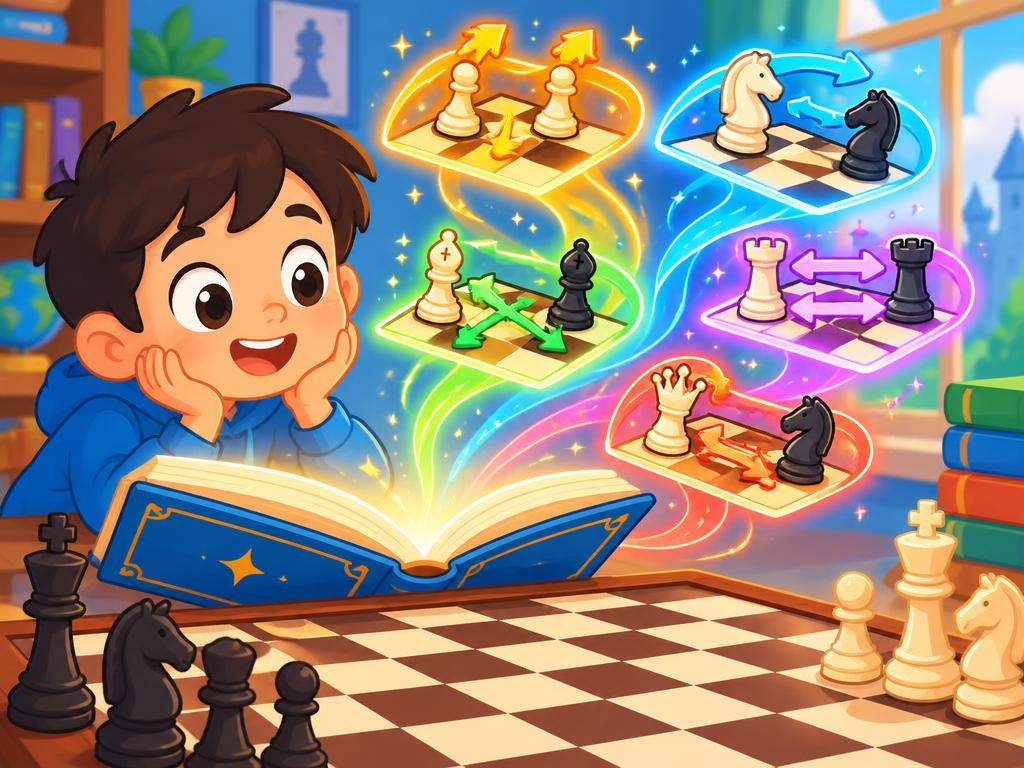
Famous Chess Openings
Openings are tested ways to begin a game. They are not magic formulas. Learn the ideas, not just the moves.
- 🇮🇹 Italian GameDevelop knight and bishop and fight for the centre
- 🇪🇸 Ruy LópezThe bishop attacks the knight that defends the centre
- Queen's GambitOffer a pawn for central influence and activity
- 🇸🇮 Sicilian DefenceBlack answers with the c pawn for an unbalanced fight
- 🇫🇷 French DefenceA solid, patient pawn structure with counterattacks
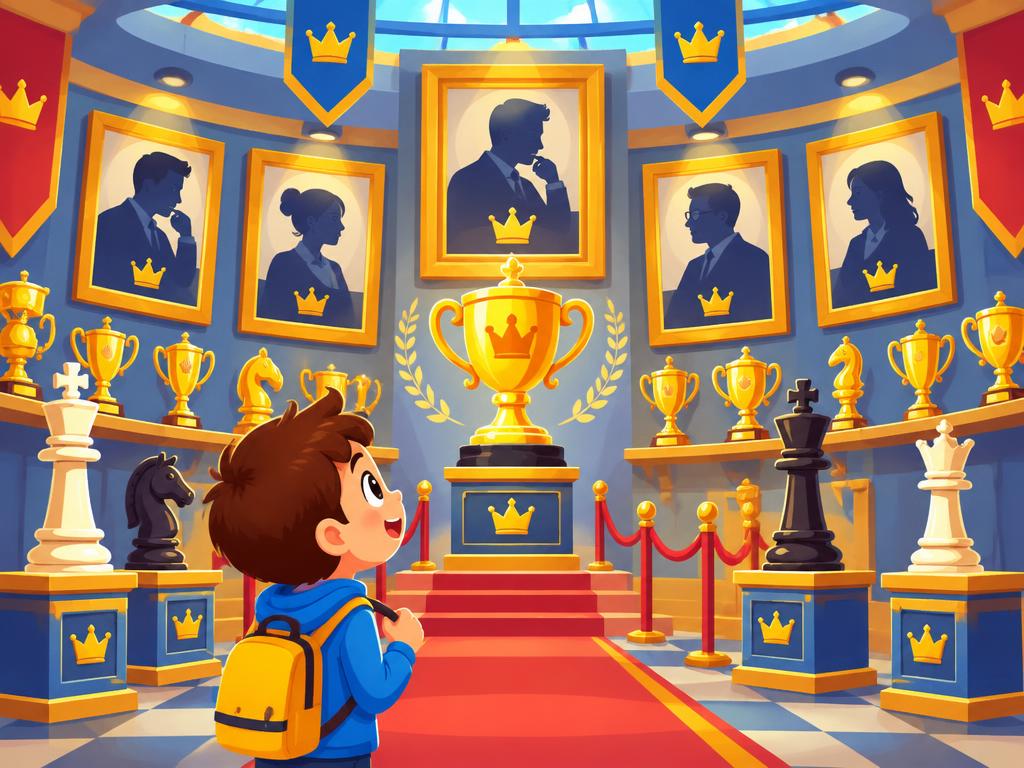
The Legends of Chess
- Judit PolgárPlayed the strongest men, reached the world top ten and beat Kasparov. Don't let expectations limit you
- Garry KasparovWorld champion in 1985. Beat Deep Blue in 1996, lost the 1997 rematch. Preparation matters
- Magnus CarlsenWorld champion in 2013, master of the endgame. Small advantages grow
- Bobby FischerWon the 1972 title in Reykjavík. Huge talent and a complicated life. Look at the whole story
- Viswanathan AnandIndia's first grandmaster and a world champion. One success can inspire a generation
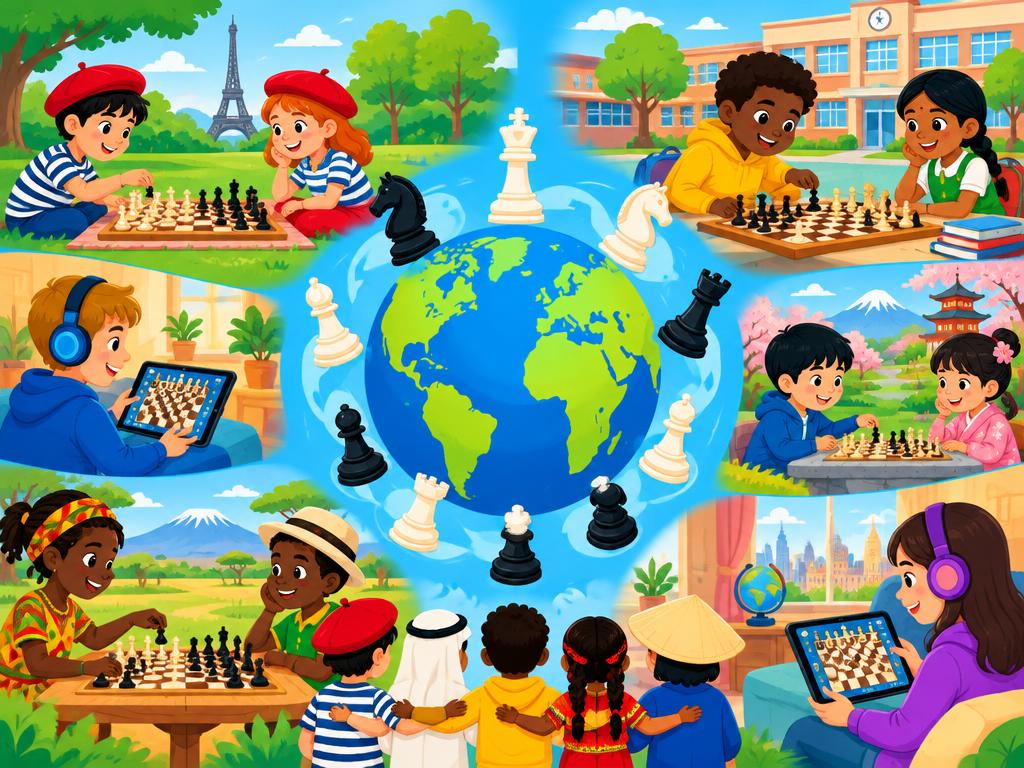
Chess Around the World
Chess is played in schools, clubs, homes, tournaments, and online. Computers can analyse positions at an extraordinary level, and players use them to study games, openings, and tactics.
A computer's answer is not the same as understanding. Strong players still need to know why a move works.
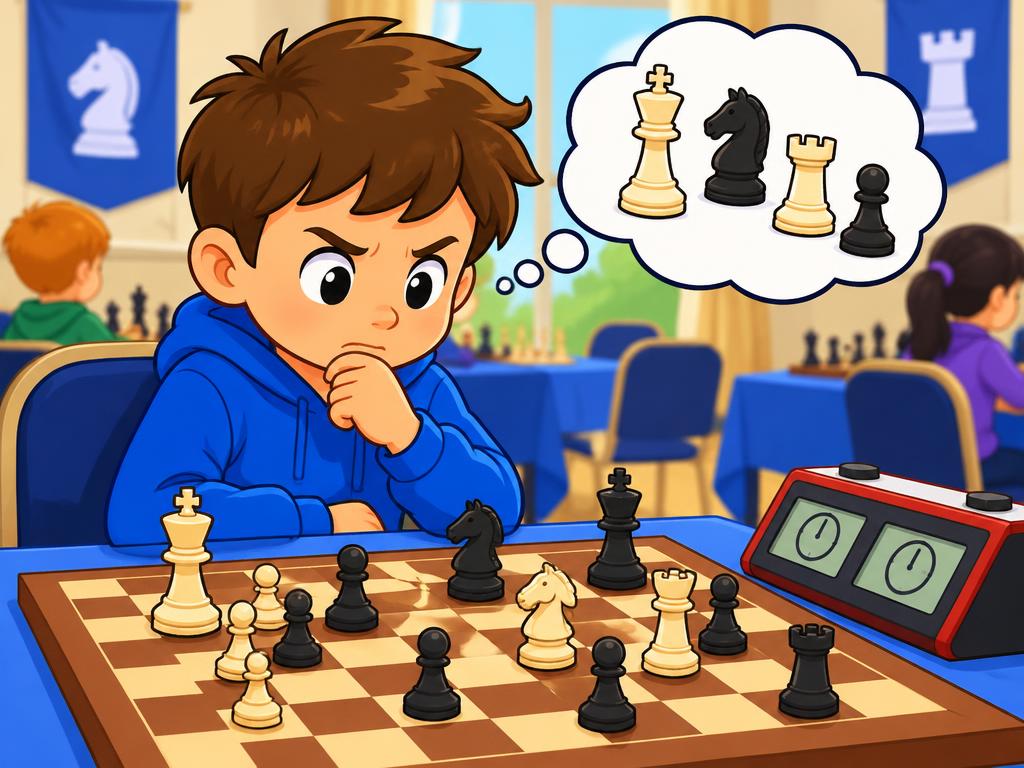
The Chess Thinking System
Before making a move, try this simple routine. Then start again.
- LookWhat is happening on the board?
- CheckIs my king safe?
- FindWhat is my opponent threatening?
- PlanWhat do I want to achieve?
- CalculateWhat could happen after my move?
- MoveMake your decision
Amazing Chess Facts
64 Squares
Every standard game is played on 64 squares.
32 Pieces
The starting position has 16 pieces for each player.
The Knight Can Jump
It is the only piece that jumps over others.
Bishops Keep Their Colour
A light square bishop stays on light squares all game.
Unlimited Possibilities
The number of possible games is unimaginably huge.
Games Change Quickly
One careless move can change everything, so stop, look, and think.
Quick Summary
♟️ Pieces
Learn how every piece moves
🎯 Centre
Fight for important squares
🚀 Development
Bring your pieces into the game
🏰 Castle
Protect your king
⚡ Tactics
Look for forks, pins, and skewers
👀 Think
Always consider your opponent's next move
Chess Dictionary
File
A vertical column of eight squares
Rank
A horizontal row of eight squares
Check
A position where a king is under attack
Checkmate
A king in check with no legal escape
Stalemate
No legal move and no check, so the game is a draw
Castling
A special move with the king and a rook
Promotion
A pawn reaching the far side becomes another piece
En Passant
A special pawn capture right after a two square pawn move
Fork
A move that attacks two or more pieces
Pin
A piece that cannot safely move because of a piece behind it
Development
Moving pieces to useful squares
Passed Pawn
A pawn no enemy pawn can stop on its way to promotion
Grandmaster
The highest title awarded by FIDE
FIDE
The international organisation that governs chess
Chess Clock
A clock that tracks each player's thinking time
You Are Now a Chess Expert!
Good players notice threats, form plans, calculate, and check before moving. That skill works far beyond the chessboard. Think before you move!