
Airport Operations Explained by Kids
Written for Kids. Surprisingly useful for adults. ✈️
Before the Plane Arrives
Before a plane even reaches the airport, people already know it is coming.
- 01 · Control Tower Watches: Air traffic controllers guide planes toward the airport using radar and computers. They choose which runway each plane should use.
- 02 · Ground Teams Prepare: A parking gate is chosen, fuel trucks get ready, cleaning crews wait, and food trucks prepare meals.
- 03 · Terminal Gets Ready: Passengers for the next flight check in, give their luggage, and wait at the gate.
The airport is preparing for the plane before it even touches the ground.
When the Plane Lands
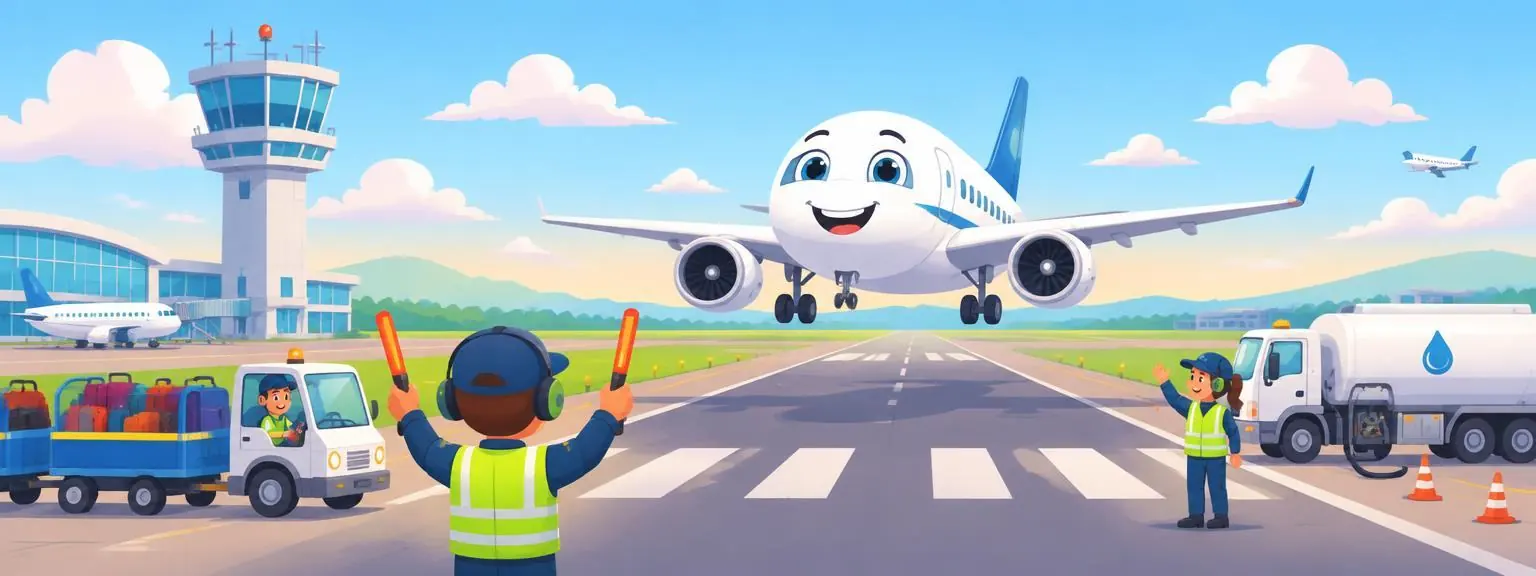
The plane lines up with the runway and gently comes down. When the wheels touch the ground, the pilot uses the brakes and the engines to slow the plane.
- Touchdown: Wheels hit the runway and brakes engage.
- Taxiways: The pilot follows special roads to reach the gate.
- Perfect Stop: Ground workers guide the plane into position with bright signals.
- Doors Open: A bridge connects and passengers exit quickly.
What Happens After the Plane Stops
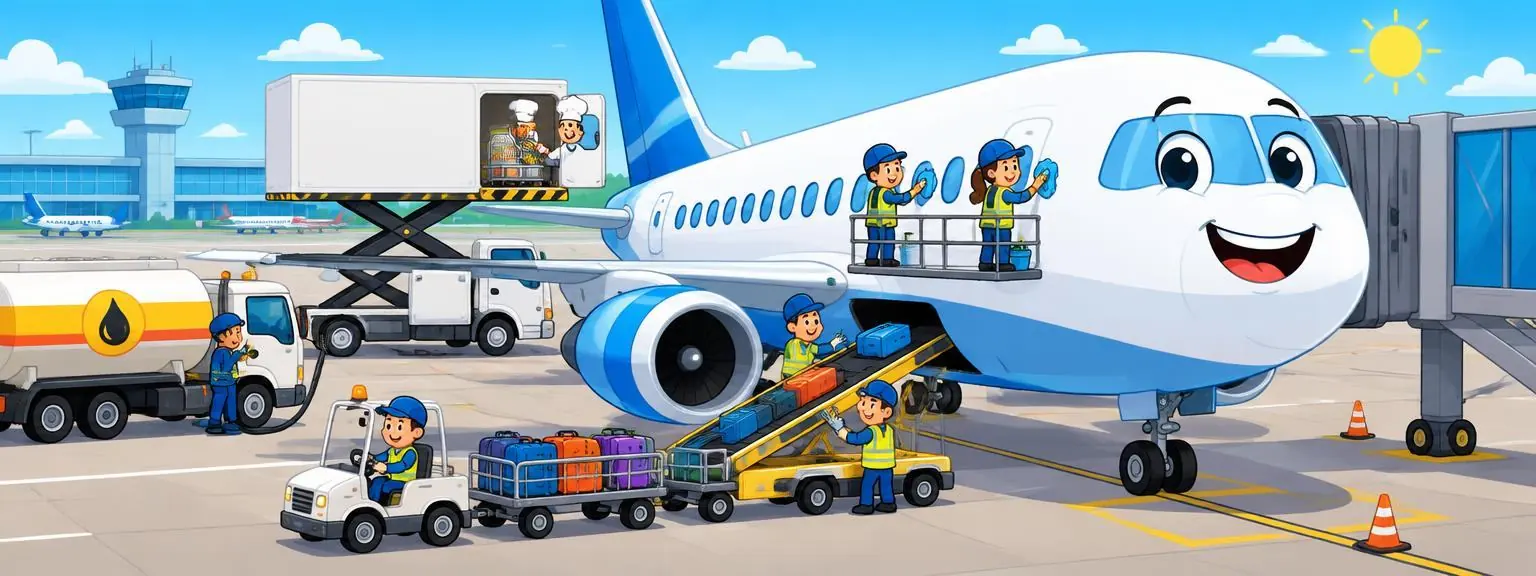
As soon as the last passenger leaves, many teams move in. This whole process can take as little as 45 minutes for some flights.
Cleaning Crew: Remove rubbish, wipe tables, clean toilets, and vacuum floors.
Baggage Handlers: Unload suitcases and cargo from the bottom of the plane.
Fuel Team: Connect a hose and fill the plane with fuel to fly thousands of kilometres.
More Important Teams
Two more crews are hard at work at the same time.
- Catering Trucks: They load fresh food, water, and drinks for the next passengers.
- Engineers: They inspect the plane for any problems. Even a broken light or seat must be fixed before flying again.
What Are Passengers Doing at the Same Time?
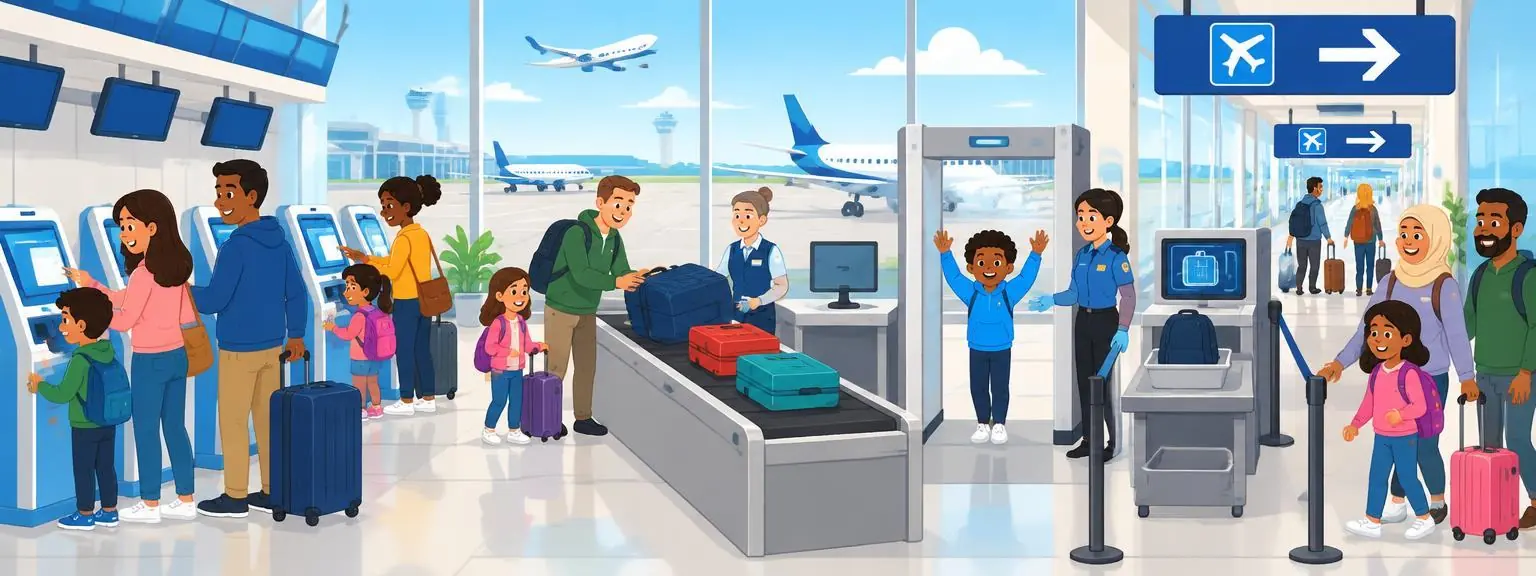
While the plane is being prepared, new passengers are inside the terminal.
- Check In: Show tickets and confirm the flight.
- Drop Bags: Give luggage to be loaded.
- Security: Go through safety checks.
- Walk to Gate: Find the right boarding area.
- Board Plane: Show your ticket and enter the aircraft.
Getting Ready to Fly Again
Before the plane leaves, the pilot talks to air traffic control again.
- Talk to Tower: The control tower tells the plane when it can move.
- Push Back: A special vehicle pushes the plane away from the gate.
- Drive to Runway: The plane moves along taxiways to the runway.
- Line Up: The plane positions on the runway for takeoff.
- Lift Off: The plane speeds up and lifts into the sky.
The whole airport team has helped make this happen.
Airports Around the World
Some airports are much busier than others.
- Busiest Airport 🏆: Atlanta, USA handles more than 100 million passengers every year.
- Smallest Airport 🏝️: Saba, Caribbean has a runway shorter than a football field.
- Global Hubs 🌐: London Heathrow, Dubai, and Istanbul connect to the most cities worldwide.
A hub airport is like the centre of a spider's web: many flights connect through it.
Why the Middle East Became So Important for Flights
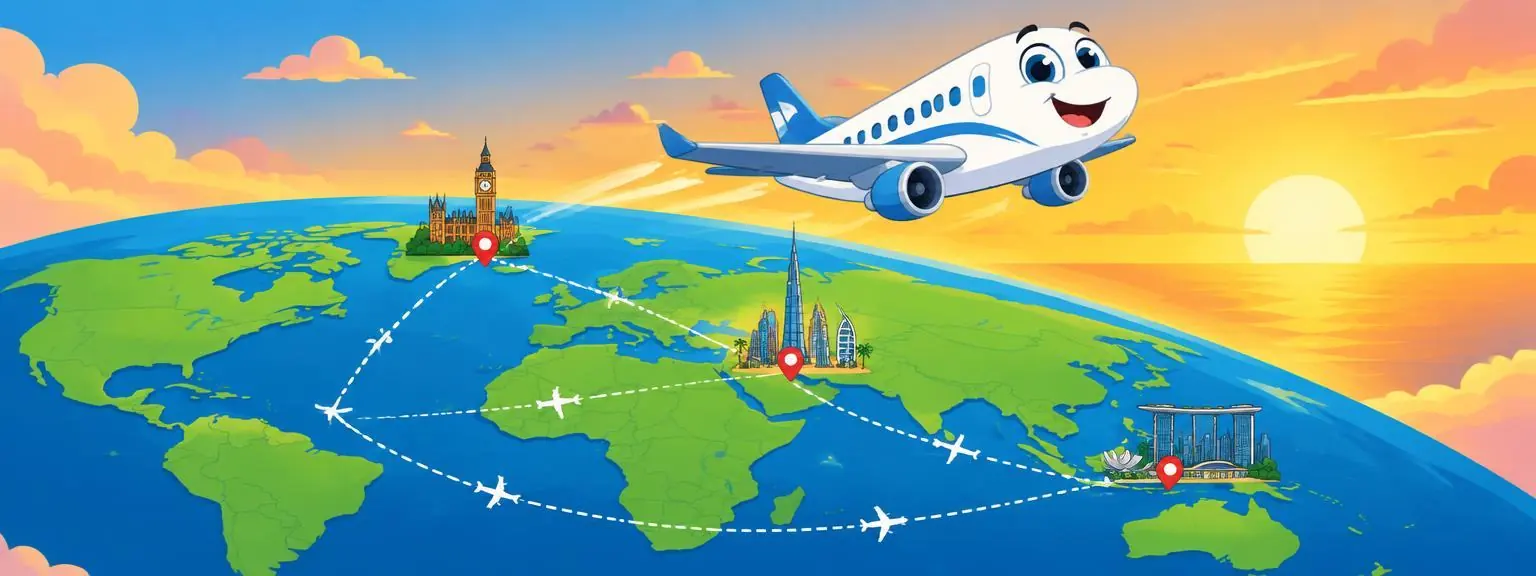
It started with fuel and a perfect location.
- Needed Fuel Stops: Long ago, planes couldn't fly far without refueling.
- Perfect Location: The Middle East was halfway between Europe and Asia/Australia.
- Built Big Airports: The UAE built modern airports and exciting cities.
- Global Hub Created: Dubai and Abu Dhabi became world travel centers.
Instead of just changing planes, people started to stay for holidays. That is how the Middle East became one of the most important flying hubs in the world.
Longest and Shortest Flights
Some planes cross oceans, while others only hop across a small stretch of water.
Longest Flight ⏱️: Singapore to New York lasts almost 19 hours, crossing half the planet without stopping. Shortest Flight ⚡: Between two Scottish islands takes less than 2 minutes, barely time to reach cruising altitude!
Amazing Airport Facts
Size: Some airports are bigger than small cities.
Fuel: A large plane can need more than 100,000 litres of fuel.
24/7 Operations: Some airports run all day and night without ever closing.
Connections: Dubai Airport connects people from over 200 cities.
Airports are like giant, busy cities where planes arrive, rest, and then fly off again!
🛫 Fun Airport Facts
100 Million Passengers per Year
Atlanta Airport handles over 100 million travelers annually: more than the population of most countries!
45 Minutes Turnaround
The quickest time to clean, refuel, restock and prepare a whole plane for its next flight.
200+ Cities Connected
Major hub airports link to hundreds of destinations, like the centre of a giant spider's web.
📘 Quick Summary
Control Tower
Controllers guide every plane in the sky and on the ground, choosing runways and keeping everyone safe.
Landing
The plane touches down, follows taxiways to the gate, and ground workers guide it into position.
Ground Teams
Cleaners, baggage handlers, fuel teams, caterers and engineers all prepare the plane: sometimes in just 45 minutes.
Passengers
Inside the terminal, travellers check in, drop bags, pass security and board for the next flight.
Takeoff
After pushback and taxiing, the plane lines up on the runway and lifts into the sky. Teamwork makes it happen!
📖 Airport Dictionary
Air Traffic Controller
A person who guides airplanes safely in the sky and on the ground.
Cargo
Goods and packages transported by airplane.
Hub
A busy airport where many flights connect to other destinations.
Taxiing
When a plane moves slowly on the ground before taking off or after landing.
Refueling
The process of adding fuel to an airplane so it can fly long distances.
Conveyor Belt
A moving belt used to carry baggage from check-in to the plane.
Checklist
A list of steps that must be followed to ensure safety and correctness.
Perishable
Items like food that can spoil or go bad quickly.
Kiosk
A small machine or stand where passengers can check in or print tickets.
Aviation Scholar
An expert who studies flight safety, airport operations, and air traffic efficiency.
You are now an Airport expert! ✈️
Keep learning, keep exploring, and be curious about how airports work! 💪✈️